Publications
Publications by Liyuan Zhang and collaborators. Browse by year or search by author, material, journal or DOI for an introduction and a close reading of each paper.
Featured papers
Browse all publications Applied Physics Letters
Uniaxial strain-induced spin zero effect in ZrTe₅
AI illustration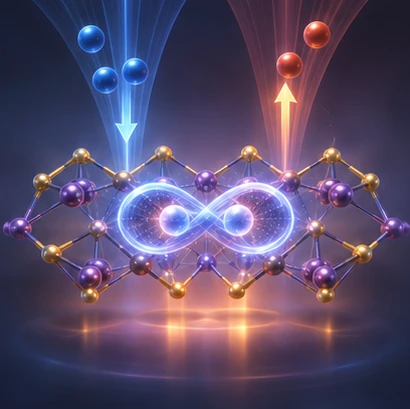 Nano Letters
Ambipolar Superconductivity with Strong Pairing Interaction in Monolayer 1T′-MoTe₂
AI illustration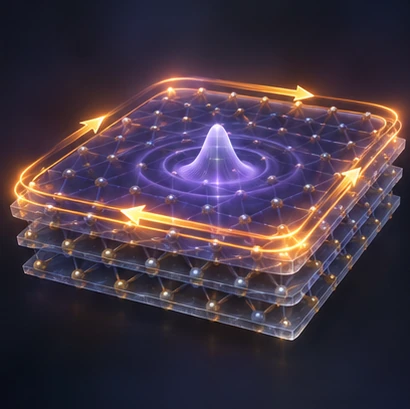 Nano Letters
Two-Dimensional Quantum Hall Effect and Zero Energy State in Few-Layer ZrTe₅
AI illustration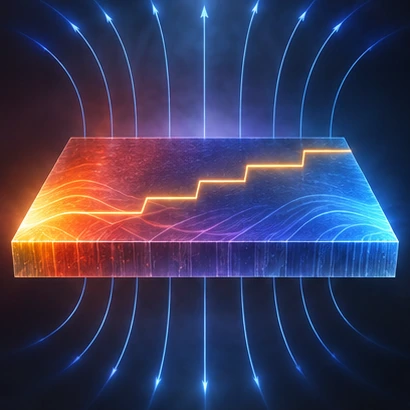 Nature Communications
Observation of a thermoelectric Hall plateau in the extreme quantum limit
AI illustration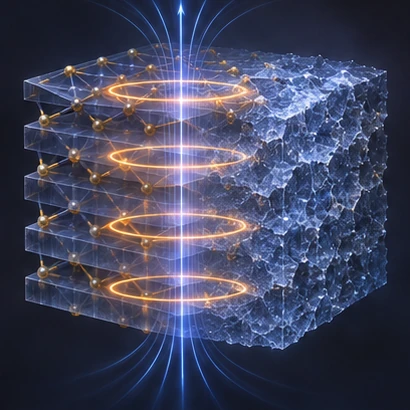 Nature
Three-dimensional quantum Hall effect and metal–insulator transition in ZrTe₅
AI illustration Chinese Physics B
Giant enhancement of superconductivity in few layers MoTe₂
AI illustration Advanced Materials
Ultrahigh-Sensitive Broadband Photodetectors Based on Dielectric Shielded MoTe₂/Graphene/SnS₂ p–g–n Junctions
AI illustration
Verified publications
63 publications- Journal articles 55
- Preprints 1
- Theses 1
- Conference publications 6
Authorship was checked against publication records, affiliations and coauthors. SUSTech faculty profileORCID
2026
 Applied Physics Letters
Multiband quantum oscillations and Kohler's rule in the extremely large magnetoresistance material pyrite PtBi₂
Quantum oscillations in thermopower and magnetic torque identify multiple Fermi-surface orbits in pyrite PtBi₂. In the same material, the large nonsaturating magnetoresistance follows a single-parameter scaling over a broad temperature range.
 Applied Physics Reviews
Ordered oxygen vacancies modulate hole transport and enhance the photoresponse in p-type SnO thin films
Ordered oxygen vacancies are identified in thin p-type SnO flakes. The paper examines how these defects affect hole transport and reports room-temperature transistor operation and ultraviolet photoresponse.
- Applied Physics Letters
Uniaxial strain-induced spin zero effect in ZrTe₅
The researchers stretched a ZrTe₅ crystal along its a axis while measuring quantum oscillations in its electrical resistance. As strain increased, the oscillation passed through a node and reappeared with the opposite sign. The authors connect that reversal to interference between two cyclotron orbits split by the magnetic field.
2025
 arXivPreprint
Enhanced anomalous Hall effect in the topological Kagome metal Cs(V₁₋ₓMnₓ)₃Sb₅
This preprint follows superconductivity, charge-density-wave order and the anomalous Hall response as Mn is introduced into a kagome metal. A large Hall response appears at low Mn content while the two ordered states evolve differently.
 Advanced Functional Materials
Ising Superconductivity and Signatures of Orbital FFLO State in Non-Centrosymmetric 3R-TaSe₂ Thin Flakes
Thickness-dependent parallel-field measurements on 3R-TaSe₂ distinguish a two-unit-cell Ising-like superconducting regime from signatures of finite-momentum pairing in thicker flakes.
 Superconductivity
Two-band superconductivity in intercalated rhombohedral ZrNCl
Intercalating sodium and organic molecules into layered ZrNCl produces a superconducting onset near 15 K. The upper critical field is compared along two orientations and its temperature dependence is described by a two-band model.
2024

2023
- Nano Letters
Ambipolar Superconductivity with Strong Pairing Interaction in Monolayer 1T′-MoTe₂
A gate can populate either the conduction band or the valence band of monolayer 1T′-MoTe₂. Although those bands have different dispersions, both electron and hole doping produced a superconducting onset near 7–8 K. Measurements in a parallel magnetic field and point-contact spectra supplied two further probes of pairing.
 Review of Scientific Instruments
An ultra-high vacuum system for fabricating clean two-dimensional material devices
This instrumentation paper integrates exfoliation and assembly of two-dimensional devices under ultrahigh vacuum. Example heterostructures demonstrate a process designed to keep newly formed interfaces clean.
 Science Bulletin
Perpendicular in-plane negative magnetoresistance in ZrTe₅
ZrTe₅ exhibits negative in-plane magnetoresistance even when the field is perpendicular to the current. The authors compare both field geometries with a model incorporating Berry curvature and orbital magnetic moment.
2022
 Communications Materials
Strain-tuned topological phase transition and unconventional Zeeman effect in ZrTe₅ microcrystals
Strain-dependent magnetotransport in ZrTe₅ follows a weak-to-strong topological-insulator transition through an intervening gapless state. The oscillation amplitudes also reveal a contribution from a spin-dependent Berry phase.
 Physical Review B
Thermal transport properties and some hydrodynamic-like behavior in three-dimensional topological semimetal ZrTe₅
Thermal and electrical transport in ZrTe₅ are compared between ballistic and diffusive regimes. The evolution of thermal conductivity and a nonmonotonic effective mean free path support a hydrodynamic-like regime.
2021
 Physical Review B
Crossover behavior in the magnetoresistance of thin flakes of the topological material ZrTe₅
Three magnetotransport signatures in ZrTe₅ flakes change near a common characteristic temperature. That temperature shifts with thickness, and the authors discuss a temperature-induced topological transition as an explanation.
 Physical Review B
Giant Nernst effect and field-enhanced transversal zNT in ZrTe₅
The authors measure a large, strongly direction-dependent Nernst response in ZrTe₅. Combining thermopower with the other transport coefficients lets them estimate the transverse thermoelectric figure of merit in field.
 Physical Review B
Quantum transport properties of β-Bi₄I₄ near and well beyond the extreme quantum limit
Quantum oscillations characterize carriers in β-Bi₄I₄ before and beyond the extreme quantum limit. A metal–insulator transition is followed, at still larger fields, by transport consistent with a field-induced gap.
 Physical Review B
Stacking faults in α−RuCl3 revealed by local electric polarization
Dielectric measurements on α-RuCl₃ reveal local polarization associated with stacking faults. Samples with different degrees of stacking disorder also show different magnetic anisotropy and field-induced behavior.
 Chinese Physics Letters
Temperature Dependent In-Plane Anisotropic Magnetoresistance in HfTe₅ Thin Layers
In-plane angular magnetoresistance and the planar Hall effect of HfTe₅ thin layers vary strongly with temperature. The authors discuss reduced spin scattering as a possible origin of the negative longitudinal signal.
 Advanced Materials Interfaces
Ternary FePSe₃ Atomic Layers with Competitive Temperature Coefficient of Resistance for Uncooled Infrared Bolometers
FePSe₃ flakes are used as uncooled bolometers: absorbed infrared radiation warms the device, and the temperature-dependent resistance converts that heating into an electrical signal. The tests cover 980–1550 nm at room temperature.
- Nano Letters
Two-Dimensional Quantum Hall Effect and Zero Energy State in Few-Layer ZrTe₅
Preserving thin ZrTe₅ during fabrication let the team reach a low-temperature hole mobility of about 3,500 cm²/(V·s). In a magnetic field the devices showed integer quantum Hall features and a zero-energy state associated with the bulk gap. The authors discuss the latter as evidence for gapless topological states within that gap.
2020
 Physical Review B
Approaching three-dimensional quantum Hall effect in bulk HfTe₅
Bulk HfTe₅ develops Hall plateaus accompanied by small but finite longitudinal resistance. Oscillations provide an independent estimate of the Fermi wavelength, which scales with the plateau values.
 Frontiers of Physics
Bandgap opening in MoTe₂ thin flakes induced by surface oxidation
Transport, scanning tunnelling microscopy and calculations examine 1T′-MoTe₂ as it is thinned. Unprotected flakes develop insulating behaviour, whereas samples protected with hexagonal boron nitride display a superconducting transition. The comparison points to a role for surface oxidation.
 Advanced Functional Materials
Interlayer Transition in a vdW Heterostructure toward Ultrahigh Detectivity Shortwave Infrared Photodetectors
A vertical GaTe/InSe junction responds at both 1064 and 1550 nm without cooling. The authors connect the extended wavelength range, beyond the individual layers' bandgap limits, to interlayer transitions enabled by type-II band alignment.
 Physical Review B
Negative longitudinal magnetothermopower in the topological semimetal ZrTe₅
Measurements on ZrTe₅ compare field-dependent electrical conductivity with longitudinal thermopower. Both contain a quadratic field contribution, allowing a test of their relative size as well as their sign.
- Nature Communications
Observation of a thermoelectric Hall plateau in the extreme quantum limit
In a strong field, carriers in ZrTe₅ can be confined to the lowest Landau level. The team combined thermoelectric and electrical measurements to obtain the transverse thermoelectric conductivity, αxy. At a fixed temperature it leveled off with increasing field, in agreement with a model for three-dimensional Dirac electrons in the extreme quantum limit.
 Advanced Functional Materials
Thermal Conductivity of HfTe₅: A Critical Revisit
Time-domain thermoreflectance resolves HfTe₅ thermal conductivity along all three crystal axes in a ratio of about 28:1:8. Through-plane conductivity is only about 0.41 W/(m·K), and first-principles calculations broadly agree with the measurements.
 Nanoscale
Zn doped MAPbBr₃ single crystal with advanced structural and optical stability achieved by strain compensation
The study examines Zn doping in MAPbBr₃ single crystals under illumination. The authors relate improved structural and optical stability to strain compensation.
2019
 Advanced Optical Materials
Black Phosphorous/Indium Selenide Photoconductive Detector for Visible and Near‐Infrared Light with High Sensitivity
An InSe layer stacked on black phosphorus forms a vertical photodetector with a response from 405 to 1550 nm. The device responds on a roughly 22 ms timescale, while the InSe cap also limits environmental degradation of the black phosphorus.
 Journal of Physics: Materials
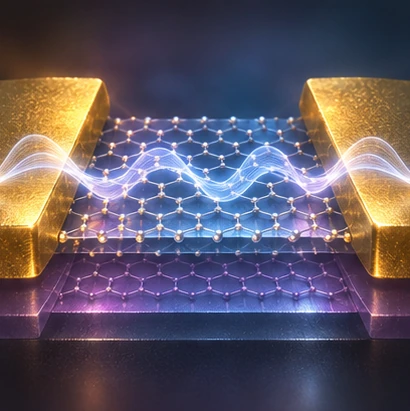
Contact transparency in mechanically assembled 2D material devices
Two-dimensional crystals are mechanically transferred onto contacts to form junctions with superconductors. Transport measurements indicate comparable or better interface transparency than in conventionally patterned devices, with contact roughness a prominent limitation.
- Chinese Physics B
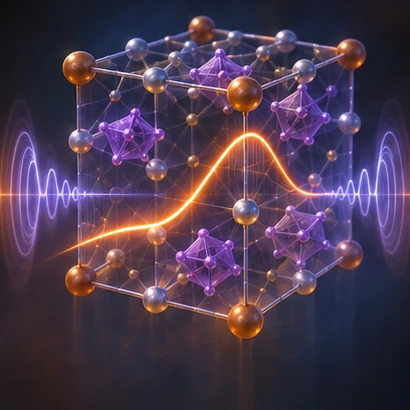
Giant enhancement of superconductivity in few layers MoTe₂
The team exfoliated MoTe₂ into thin flakes and measured transport as a function of temperature, field and gate voltage. The highest superconducting onset temperature reached 5.3 K, above its bulk counterpart. The in-plane upper critical field exceeded the usual Pauli limit, and the gate measurably shifted both the transition temperature and the critical field.
 Chinese Physics B
Negative differential resistance and quantum oscillations in FeSb₂ with embedded antimony
Low-temperature transport and magnetic torque are measured in FeSb₂ crystals containing embedded antimony. Current-controlled negative differential resistance appears below about 7 K, and the angular dependence of quantum oscillations carries a signature of oriented antimony inclusions.
 Journal of Physics: Condensed Matter
Quasi-2D superconductivity in FeTe₀.₅₅Se₀.₄₅ ultrathin film
Transport and point-contact Andreev spectroscopy probe FeTe₀.₅₅Se₀.₄₅ near its coherence-length thickness. Films as thin as 5 nm retain a transition temperature close to the bulk value. Anisotropic critical fields and signatures of a BKT transition support quasi-two-dimensional superconductivity.
 Applied Physics Letters
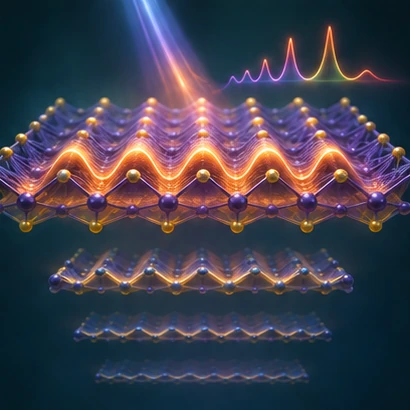
Raman spectra and dimensional effect on the charge density wave transition in GdTe₃
Temperature-dependent Raman spectra and calculations separate phonon modes from charge-density-wave features in GdTe₃. The reported transition rises from 377 K in bulk to 431 K in a film about 10 nm thick.
 Physical Review Materials
Raman spectroscopy evidence for dimerization and Mott collapse in α-RuCl₃ under pressures
Pressure-dependent Raman spectra resolve two transitions in α-RuCl₃. New modes accompany a stacking change; at higher pressure, in-plane Ru–Ru dimerization accompanies the collapse of the Mott state. Second-harmonic generation independently tests inversion-symmetry breaking.
- Nature
Three-dimensional quantum Hall effect and metal–insulator transition in ZrTe₅
A magnetic field drove bulk ZrTe₅ into the lowest Landau level. At low temperature the longitudinal resistivity approached zero while the Hall resistivity formed a plateau. Its height scaled with half the Fermi wavelength along the field, which the authors interpreted as evidence for a three-dimensional quantum Hall state. At higher field they observed a metal–insulator transition.
- Advanced Materials
Ultrahigh-Sensitive Broadband Photodetectors Based on Dielectric Shielded MoTe₂/Graphene/SnS₂ p–g–n Junctions
The team stacked p-type MoTe₂, graphene and n-type SnS₂ between layers of hexagonal boron nitride. The semiconductors absorb complementary parts of the spectrum, while the junction assists separation of photoexcited charge. At room temperature the device detected illumination at wavelengths spanning 405 to 1,550 nm.
2018
 Solid State Communications
Gate tunable Kondo effect in magnetic molecule decorated graphene
Low-temperature transport probes Kondo screening after cobalt phthalocyanine molecules are deposited on graphene. Screening persists to around 20 K at high carrier density and weakens as a gate lowers that density.
 Chinese Physics B
Multi-carrier transport in ZrTe₅ film
Hall measurements and quantum oscillations reveal contributions from both electrons and holes in ZrTe₅ films of different thicknesses. The dominant carrier type switches near a thickness of 40 nm in the measured devices.
 ACS Applied Materials & Interfaces
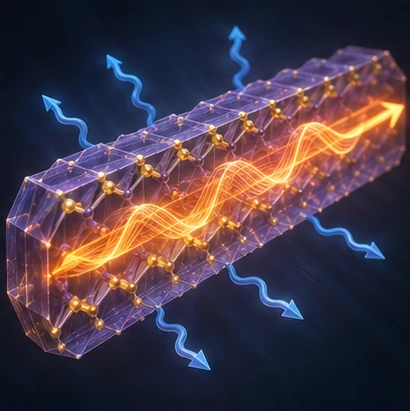
Record-Low and Anisotropic Thermal Conductivity of a Quasi-One-Dimensional Bulk ZrTe₅ Single Crystal
Time-domain thermoreflectance measures heat transport along different axes of ZrTe₅. At room temperature its through-plane b-axis conductivity is about 0.33 W/(m·K), roughly one twelfth of the value along a.
2017
 Physical Review B
In-plane magnetization-induced quantum anomalous Hall effect in atomic crystals of group-V elements
Models parameterized by first-principles calculations examine buckled honeycomb layers of group-V elements. They predict that in-plane magnetization can produce quantum anomalous Hall phases with absolute Chern number one or two, depending on spin–orbit coupling.
 Rare Metals
Rapid and nondestructive layer number identification of two‐dimensional layered transition metal dichalcogenides
Reflection spectra are compared for MoS₂, MoSe₂ and WSe₂ flakes on silicon with a 275 nm oxide layer. Atomic-force thickness measurements and Fresnel calculations calibrate a nondestructive way to identify monolayers and few-layer samples.
2016
 Applied Physics Letters
Modification of electronic band structure in mL + nL (m = 1, 2; n = 1–5) free-stacking graphene
Raman spectra track the 2D band when graphene sheets of different layer counts are stacked. When one constituent is a monolayer, the band shifts to higher frequency, with a larger shift as the other constituent becomes thicker.
 Rare Metals
Rapidly counting atomic planes of ultra-thin MoSe₂ nanosheets (1 ≤ n ≤ 4) on SiO₂/Si substrate
Optical contrast is used to identify one to four layers of MoSe₂ on SiO₂/Si substrates. Spectroscopic measurements are compared with a Fresnel model and checked against atomic-force microscopy.
2015
 ACS Applied Materials & Interfaces
Effects of Graphene Modification on the Bioactivation of Polyethylene-Terephthalate-Based Artificial Ligaments
Graphene-coated PET ligament grafts were compared with uncoated PET. Cell assays indicated enhanced osteogenic responses; histology and mechanical tests in a rabbit model also favoured the coated grafts at the bone interface.
 Rare Metals
Enhanced spin diffusion length by suppressing spin‐flip scattering in lateral spin valves
Nonlocal measurements in lateral spin valves probe silver strips with different injector–detector separations. Adding an MgO cap enhances the spin-accumulation signal and increases the inferred spin-diffusion length.
2012

2011
 APS March Meeting AbstractsConference publication
Microstructure and Transport Studies of Functionalized Graphene
The researchers combined transport measurements, atomic force microscopy and Raman spectroscopy. Minimum conductivity varied from 2 to 12 e²/h across the graphene samples, and shifts of the G and 2D peaks were associated with strain and doping. After iron deposition, transport changed and microscopy showed clusters on the surface.
 Nature Physics
The experimental observation of quantum Hall effect of l=3 chiral quasiparticles in trilayer graphene
Quantum oscillations and Hall plateaus in ABC-stacked trilayer graphene are measured alongside the density dependence of the cyclotron mass. Together these observations support chiral quasiparticles with cubic dispersion.
2010
 Physical Review Letters
Metal to Insulator Transition on the N = 0 Landau Level in Graphene
Temperature-dependent transport distinguishes metallic and insulating behaviour on graphene's lowest Landau level. The crossover occurs near an absolute filling factor of 0.65 in the reported sample and correlates with a zero plateau in Hall conductivity.
 Nature Physics
Visualization of charge transport through Landau levels in graphene
Spatially resolved photocurrent measurements map charge collection in graphene in the quantum Hall regime. The maps link the signal at the contacts to hot carriers reaching the perimeter, where edge states support their collection.
2009
 Extended Abstracts of the 2009 International Conference on Solid State Devices and MaterialsConference publication
AFM Nanolithography of Graphene
This SSDM contribution from Purdue University discussed patterning graphene with an atomic force microscope. The team's companion journal article shows how the method can cut insulating trenches and define a nanoribbon and a submicrometre ring.
 Physical Review B
Breakdown of the N = 0 quantum Hall state in graphene: Two insulating regimes
Measurements up to 18 T follow graphene towards charge neutrality. At lower filling, a regime consistent with localized transport gives way near filling one-half to a cusp and a still steeper rise in longitudinal resistance.
 APS March Meeting AbstractsConference publication
Electronic Properties of Large-scale Graphene Chemical Vapor Synthesized on Nickel and on Sapphire
The team compared few-layer films grown on nickel and transferred to a silicon-based substrate with films grown directly on sapphire. Across measurements spanning 2–300 K and fields up to 7 T, both types showed negative low-field magnetoresistance. Weak-localization features in the transferred films allowed the team to estimate carrier scattering lengths.
 APS March Meeting AbstractsConference publication
Experimental studies of the transport in graphene in a parallel magnetic field at low temperatures
Zhang and colleagues applied a magnetic field along single- and few-layer graphene devices and followed the resistance near the Dirac point at low temperatures. They varied the field, temperature and chemical potential to probe how the devices responded.
 APS March Meeting AbstractsConference publication
Influence of substrates on graphene layers: Raman study
The team used Raman spectra to compare graphene on different substrates and in the presence of adsorbates. The intensity, frequency and width of selected vibrational peaks changed with the chemical environment. The authors discussed these changes in terms of interactions with charge carriers and disorder.
2008
2007
 Nanotechnology
A single electric relaxation time in Ba₁₋ₓSrₓTiO₃ nanoparticles at low temperatures
The dielectric response of Ba₀.₇₇Sr₀.₂₃TiO₃ nanoparticles changes character on cooling. Below 200 K a single Debye relaxation time fits the frequency dependence, whereas above 210 K the response spans a broad range of times.
 Georgia Institute of Technology, School of PhysicsDoctoral thesis
Spin Transport in Aluminum Grains and Single Debye Relaxation in BST Nanoparticles
Zhang’s dissertation brings together two nanoparticle experiments. A Hanle measurement of aluminium grains in ferromagnetic tunnel junctions gave a spin-coherence time on the order of nanoseconds. In barium strontium titanate and barium titanate particles, the dielectric response showed a single Debye relaxation time with thermally activated behaviour below 200 K.
2006
 Physical Review Letters
Mesoscopic Resistance Fluctuations in Cobalt Nanoparticles
Reproducible fluctuations in the resistance of cobalt nanoparticles form a fingerprint as the bias is swept. The fingerprint rearranges during magnetization reversal when magnetic domains appear or disappear.
 The Journal of Physical Chemistry B
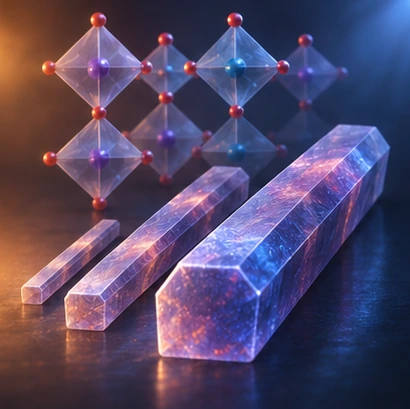
Size-Manipulable Synthesis of Single-Crystalline BaMnO₃ and BaTi₁/₂Mn₁/₂O₃ Nanorods/Nanowires
The study grows single-crystal barium manganite and barium titanium manganite nanorods in a hydroxide medium. Reaction time, temperature and water content tune rod length. Resistance reveals a transition near 58 K in the former compound; the latter shows two emission peaks.
 Nano Letters
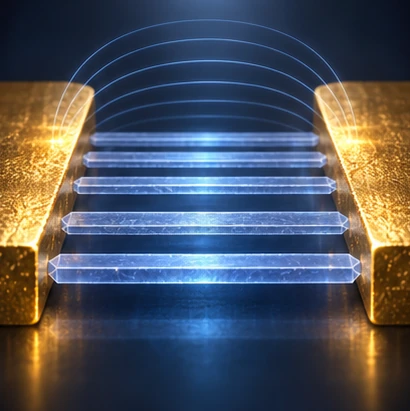
ZnO Nanobelt/Nanowire Schottky Diodes Formed by Dielectrophoresis Alignment across Au Electrodes
Dielectrophoresis aligns individual ZnO nanobelts or nanowires across pairs of gold electrodes. The resulting devices rectify current, with forward-to-reverse current ratios reaching about 2,000; measurements extend to low temperatures.
2005

2004

2001
No publications match. Try a different keyword or year.
Browse the original numbered bibliography